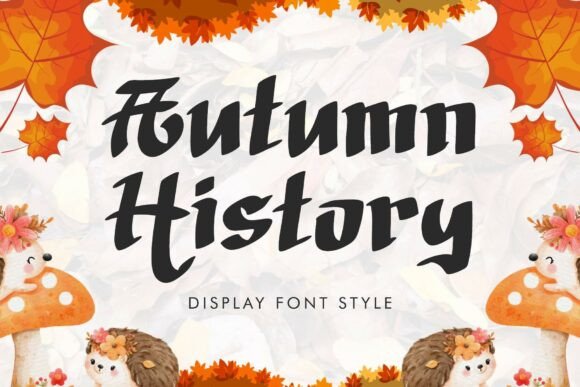
Autumn History Font for Business Branding
As a small business owner, choosing the right font can make a big difference in how your brand is perceived. Autumn History is a bold and nostalgic display font that blends vintage flair with seasonal charm. Its sharp strokes and medieval-inspired letter style bring a sense of authenticity and character to any design. Whether you're creating packaging, social media content, or website visuals, Autumn History offers a unique way to elevate your brand's aesthetic.
Autumn History for Fall-Themed Branding and Seasonal Campaigns
Autumn History is an ideal choice for businesses looking to create a strong visual identity during the fall season. Its vintage and nostalgic appeal makes it perfect for branding that evokes warmth, comfort, and tradition. From handmade candle labels to bakery packaging, this font adds a touch of elegance and timelessness that resonates with customers looking for authentic experiences.
For example, a boutique offering seasonal home decor could use Autumn History on product tags and packaging to reinforce a cozy, autumnal vibe. Similarly, a coffee shop might incorporate it into seasonal menu designs or promotional posters to create a cohesive and inviting brand presence.
Autumn History for Logo Design and Business Identity
When it comes to logo design, the right font can define a brand’s personality. Autumn History’s bold and medieval-inspired style gives it a strong visual impact, making it a great option for logos that need to stand out while still feeling professional. Whether you’re launching a new business or rebranding an existing one, this font can help you create a memorable and distinctive logo.
Businesses such as coaching services, wellness brands, or artisanal shops can benefit from using Autumn History in their logos. It conveys a sense of authority and creativity, which can help build trust with customers. Pairing it with a clean sans serif font for supporting text ensures readability without sacrificing style.
Autumn History for Social Media Graphics and Digital Content
Social media is a powerful tool for small businesses, and the right typography can make your content more engaging and visually appealing. Autumn History works well for Instagram posts, Pinterest graphics, and digital ads, especially when used as a headline or accent font. Its bold and decorative style draws attention, helping your content stand out in crowded feeds.
Consider using Autumn History for holiday-themed posts, limited-time offers, or seasonal promotions. For instance, a handmade soap brand could use it in a post announcing a fall collection, while a local café might use it for a “Cozy Autumn Drinks” promotion. The font’s vintage charm adds a personal touch that connects with audiences on an emotional level.
Autumn History for Website Banners and Web Design
Your website is often the first point of contact between your business and potential customers. Using Autumn History in website banners, headlines, or call-to-action buttons can enhance the overall look and feel of your site. Its bold and dramatic style works well for sections that need emphasis, such as featured products, special offers, or seasonal updates.
However, it’s important to use it strategically. Since it’s a display font, it may not be suitable for large blocks of body text. Instead, pair it with a readable serif or sans serif font for main content. This approach maintains visual interest while ensuring your website remains user-friendly and accessible across devices.
Autumn History for Packaging Design and Product Labels
Packaging and product labels are crucial for making a lasting impression on customers. Autumn History adds a sophisticated and timeless look to these elements, making it ideal for businesses that want to convey quality and craftsmanship. Its sharp strokes and medieval-inspired design give it a premium feel that can elevate even simple products.
A handmade candle company, for example, could use Autumn History on its labels to emphasize the artisanal nature of its products. Similarly, a small skincare brand might use it on packaging to create a luxurious and natural aesthetic. The font’s versatility allows it to work well with both minimalist and elaborate designs, depending on your brand’s style.
Autumn History for Business Cards and Marketing Materials
Business cards are a vital part of networking and client interactions. Using Autumn History on your business card can make your contact information more visually striking and memorable. Its bold and nostalgic style helps your card stand out in a stack, increasing the chances that it will be remembered.
When designing marketing materials such as flyers, brochures, or thank-you cards, Autumn History can add a personal and artistic touch. It’s especially effective for businesses that want to communicate a sense of tradition, creativity, or craftsmanship. Just be sure to test the font at different sizes to ensure it remains legible and impactful.
Autumn History for Online Shop Branding and E-Commerce Presence
If you run an online store, your branding needs to be consistent across all platforms. Autumn History can help you maintain a cohesive look on your website, product listings, and social media profiles. Its vintage and seasonal appeal makes it particularly well-suited for e-commerce businesses that sell handmade goods, seasonal items, or niche products.
For example, an online shop selling custom jewelry could use Autumn History in its product titles and promotional banners to create a more elegant and curated shopping experience. A small clothing brand might use it in email newsletters or social media ads to reinforce its brand story and aesthetic.
Autumn History for Customer-Facing Materials and Brand Consistency
Consistency is key to building a strong brand. Using Autumn History across customer-facing materials—such as invoices, receipts, and packaging—helps reinforce your brand’s identity and creates a more professional appearance. It also ensures that your business feels unified and intentional in every interaction.
Before applying the font across all materials, it’s a good idea to test it in different contexts. Try using it in a sample invoice, a mock-up of a product label, or a social media post to see how it looks in real-world situations. This step can help you avoid unexpected issues and ensure the font works well for your specific needs.